What Do You Need for a Home Bar? 7 Essentials (and What to Skip)
Building a home bar sounds like something that requires an entire shelf of expensive bottles, specialized tools, and a collection of glasses for every possible cocktail.
It doesn't.
In fact, most home bars work better when you start small.
Whether you're making the occasional Old Fashioned, mixing drinks for friends, or simply want to be prepared when someone comes over, a few thoughtful essentials will get you surprisingly far.
Here's what you actually need—and what you can skip.
1. A Good Cocktail Shaker
If you enjoy margaritas, daiquiris, whiskey sours, or other cocktails made with citrus juice, a shaker is one of the most useful tools you can own.
It chills and combines ingredients quickly, giving your cocktails the proper temperature and texture.
A simple stainless steel shaker is all you need.
You don't need an expensive set with a dozen accessories.
What to look for: A well-fitting, durable stainless steel shaker that's comfortable to use and easy to clean.
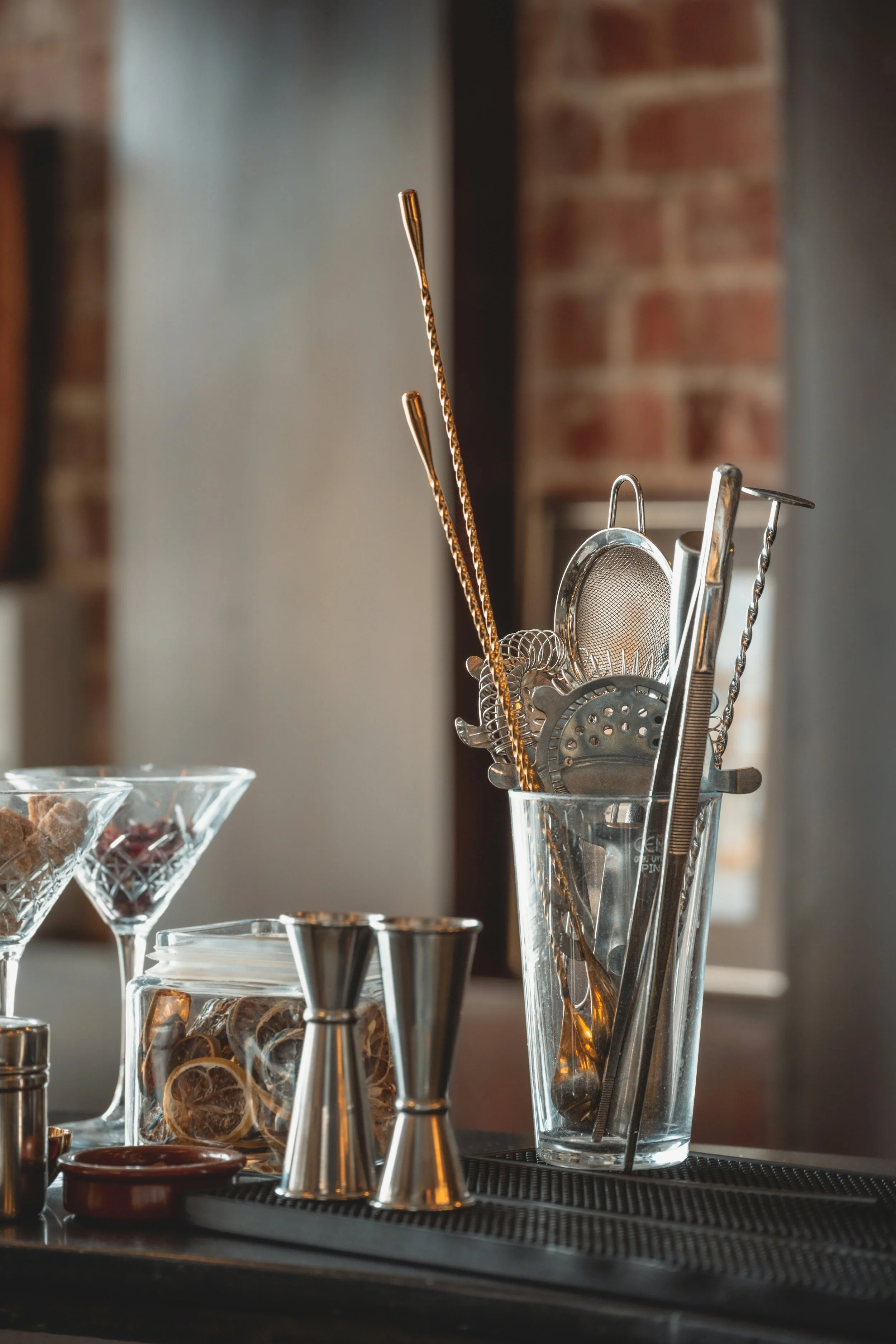
2. A Jigger for Measuring
One of the biggest differences between a balanced cocktail and a disappointing one is the amount of each ingredient.
A jigger takes the guesswork out of measuring.
Even experienced bartenders rely on consistent proportions because a little too much citrus, syrup, or liquor can completely change a drink.
Look for a double-sided jigger with clear measurement markings.
It's inexpensive, takes up almost no space, and makes a noticeable difference.
3. A Mixing Glass and Bar Spoon
Not every cocktail belongs in a shaker.
Spirit-forward drinks like Martinis, Manhattans, and Negronis are generally stirred rather than shaken.
A mixing glass and bar spoon make that process easier.
But if you're just starting out, there's no need to buy an elaborate crystal mixing glass.
A sturdy glass vessel and a long spoon can work perfectly well.
Upgrade later if you find yourself regularly making stirred cocktails.
4. A Strainer
After shaking or stirring a cocktail, you'll usually want to separate the finished drink from the ice.
That's where a strainer comes in.
A Hawthorne strainer works particularly well with cocktail shakers, while a julep strainer is commonly used with mixing glasses.
You don't necessarily need both immediately.
Start with whichever fits the drinks you make most often.
5. Two Types of Glassware
This is where people tend to overcomplicate things.
You don't need a separate glass for every cocktail.
For most home bars, I'd start with just two styles:
Rocks glasses: Great for Old Fashioneds, Negronis, whiskey, and cocktails served over ice.
Coupe glasses: Useful for Daiquiris, Manhattans, and other cocktails served without ice.
Those two styles will cover a surprisingly wide range of drinks.
If you frequently make highballs, gin and tonics, or spritzes, taller glasses are a useful addition.
But there's no need to buy everything at once.
For glassware and bar tools that are genuinely worth considering, visit our [Recommended Essentials] page.
6. A Small Selection of Spirits
You don't need a bottle of every liquor available.
Start with what you actually enjoy drinking.
If you love margaritas, tequila makes sense.
If you prefer Old Fashioneds, start with bourbon or rye.
If you're a Martini drinker, gin or vodka might be your priority.
A practical starting collection could include:
Bourbon or rye
Gin
Tequila
Vodka
But even those four aren't mandatory.
Two bottles you regularly use are more valuable than ten bottles gathering dust.
7. The Ingredients That Make Cocktails Work
A good home bar isn't just about liquor.
Some of the most important ingredients are inexpensive:
Fresh lemons and limes
Simple syrup
Bitters
Club soda or sparkling water
Tonic water
Plenty of ice
Depending on what you enjoy, you might also keep sweet or dry vermouth, orange liqueur, or other mixers.
Just remember that some ingredients, particularly vermouth, need refrigeration after opening.
Buy ingredients based on the cocktails you actually plan to make rather than stocking everything just in case.
What You Can Skip
There's nothing wrong with collecting bar equipment if you enjoy it.
But if your goal is simply to make good cocktails at home, you can skip a surprising amount.
Expensive cocktail kits: Many include tools you'll rarely use.
Specialty glassware for every drink: Two or three versatile styles are enough for most people.
A dozen different spirits: Start with your favorites.
Decorative bar accessories: They may look attractive, but they won't make your cocktails taste better.
Professional bar equipment: Unless you're regularly entertaining large groups, you probably don't need it.
Spend money on things that improve the drinks you're actually making.
Build Your Home Bar Slowly
One of the easiest ways to waste money is to buy everything at once.
Instead, choose three or four cocktails you enjoy.
Look at the ingredients and equipment those drinks require.
Then build your bar around them.
As your tastes change, you can add new spirits, tools, or glassware.
Over time, you'll end up with a collection that reflects how you actually drink—not what someone else's home bar looks like.
Final Sip
A good home bar doesn't need to be expensive or complicated.
Start with a shaker, a jigger, a strainer, a few versatile glasses, and the spirits and ingredients you genuinely enjoy.
Add a mixing glass if you regularly make stirred cocktails, and expand only when you have a reason.
The goal isn't to recreate a professional cocktail bar in your kitchen.
It's to make drinks you enjoy, confidently and without overthinking every detail.
This article contains affiliate links. I may earn a commission if you purchase through them, at no additional cost to you.